Brian Driscoll

Komi-Land

The " Komi Land " is a series of photographs that reflect the daily lives of forgotten Germans who were exiled to the Komi Republic, Russia during and after WWII. A region situated west of the Ural Mountains in the far north of the Russian European plain.

Since 1942, the Komi Republic was occupied by the Trudarmeytsy Germans from the eastern regions of the USSR. Germans were exposed not only to national discrimination, but they were also denied many civil rights; their lives constantly came up against various kinds of restrictions and prohibitions. Special settlers did not have passports, which virtually made them outcasts in a society, many people including women and children served time as political prisoners in labor camps and were forced to work in coal mines, build railway lines and housing. Thousands of people were displaced and quite a few faced execution.

Russian Germans who wished to remain in the Komi, decided to consolidate. They began to band together in places where they could preserve their national identity, culture and language. I have attempted to portray and disclose the relationship of Russian Germans and the land in which they reside and to show the layers of tradition, identity and history in a region so pastoral yet a deplorable past still lingers. 2011

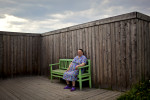
Oreshkina Anna Alexandrovna, born in 1933, served as a child prisoner at one of the labor camps in the Komi Republic. Her parents were Russian Germans from the Ukraine, they were exiled to the Komi Republic in 1946.
  
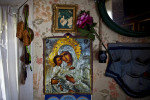
A portrait of the Madonna and the Christ child hang on the wall at the home of Ungelfug Gennadiy Rihardovich. Korotkeros, Russia.
  
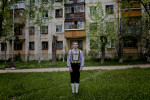
Edward Capyrin, a fourth generation Russian German stands for a portrait in a German folk costume in Syktyvkar, Russia. His great-grandmother was exiled to the Komi Land.
     
  
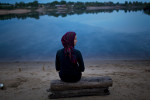
Numerous lakes, rivers, and waterways were the main means of transportation and communication throughout the Komi Republic in the early days.
  
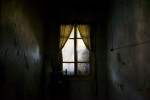
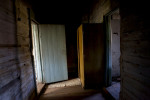
 labor camp interior where worked prisoners including children served time and were executed still stands, Korotkeros, Russia.
  
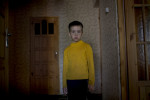
Fourth generation Russian German, Dima Dmitry, 8, stands for a portrait at home in Korotkeros, Russia.
     
  
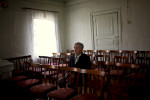
The pastor of the Lutheran church in Syktyvkar, Russia, engage in conversation with Russian German church ladies after Sunday mass.
  
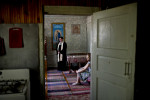
Ungelfug Rihardovich, 61, and his grandson fourth generation Russian German, Dima Dmitry, 8, in the hallway of their home in Korotkeros, Russia.
  
A street scene in downtown Syktyvkar. Russian Germans who wished to remain in the Komi Republic, decided to consolidate. They began to band together in places where they could preserve their national identity, culture and language.
     
  
Russian Germans struggle to maintain identity and hold onto traditional values as younger generations become integrated.
  
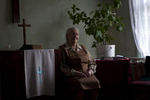
Russian German ladies spend most of their days at the Lutheran church in the city of Syktyvkar, Russia.
  
A young boy takes a rest on a swing outside of his apartment house in Syktyvkar, Russia.
     
  
A view from inside a labor camp where worked prisoners including children served time and were executed still stands, located outside of Korotkeros, Russia.
  
Maria Yurkina, fourth generation Russian German sits for a portrait at her home in Syktyvkar, Russia. Maria's grandmother feels Russian, but speaks the German language. Her family was exiled to the Komi Republic in 1945.
  
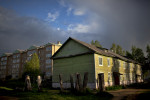
Komi villages, mostly consisting of wooden houses, connecting the stories of two nations: the Russian and the Komi.
     
  
Bekk Villi Oskarovich, 77, from Ukraine, was held in captivity until 1945, then was promised to be returned home to the Ukraine, but he was exiled to Komi Republic.
  
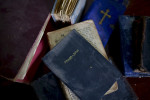
Old German bibles still remain at the Lutheran church in Syktyvkar, Russia.
  
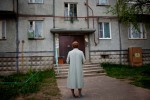
Korukaeva Aliza Ignatievna , 80, and her son Evgeniy stand in the front yard of their home in Zaton, Russia. Korukaeva was exiled with her family to the Komi Republic from Ukraine in 1933.
     
  
An interior view from the home of a Russian German family living in Syktyvkar, Russia.
  
According to the 2002 census, the Komi population of some 9,000 Germans, mostly live in the capital of Syktyvkar, Ezhva, as well as Maksakovka, Sedkyrkesch, Krasny, Zaton, and the industrial and woodworking areas.